Decorating a Tenement Flat in Edinburgh: A Homeowner’s Guide
Edinburgh’s tenement flats are the backbone of the city’s housing. From the sandstone blocks of Marchmont and Bruntsfield to the Georgian tenements of the New Town and Stockbridge, and the converted warehouse buildings of Leith, these flats are home to a huge proportion of Edinburgh residents.
They’re also some of the most rewarding properties to decorate — when you know what you’re dealing with. This guide covers the practical issues tenement owners face and the approaches that consistently deliver the best results.
Dealing with Cracked and Uneven Plaster
If there’s one thing almost every Edinburgh tenement has in common, it’s imperfect plaster. Original lime plaster develops hairline cracks over time, and previous repairs using modern gypsum can create hard edges and uneven patches. The walls in a tenement are rarely flat by modern standards — and they were never meant to be.
Before any decorating begins, the plaster needs honest assessment. Tap the walls and listen — a hollow sound can indicate the plaster has separated from the lath behind it. Small cracks and dents can be filled and sanded, but areas that are bulging or crumbling will need to be cut out and re-skimmed. Trying to paint over failing plaster always leads to a poor result that doesn’t last.
Our plastering service covers everything from localised patch repairs to full room re-skims. We use materials appropriate to the substrate, which matters in older tenements where lime plaster needs to breathe rather than being sealed under modern products.
High Ceilings: An Asset and a Challenge
Main-door and upper tenement flats in Edinburgh often have ceiling heights of 3 metres or more. These generous proportions are one of the great advantages of tenement living — rooms feel spacious and light, and there’s room for tall furniture, bold colours, and decorative features like picture rails and cornicing.
The challenge is practical. Painting ceilings and cutting in around cornicing at height requires proper access — a standard stepladder isn’t safe or effective above about 2.5 metres. We use scaffold platforms and tower systems for higher ceilings, which allow us to work safely and maintain the quality of finish around detailed cornicing and ceiling roses.
If you’re painting the ceiling yourself, consider whether you can realistically reach every part safely. Ceilings are one of the areas where hiring a professional makes the most noticeable difference, both in safety and in the quality of the finish. Our high-ceiling kitchen project in Edinburgh’s West End shows what’s achievable with the right access and equipment.
Maximising Light in a Tenement Flat
Light is one of the defining features of tenement life — and one of its biggest variables. Front-facing rooms with large sash windows can be flooded with natural light, while internal rooms, hallways, and north-facing bedrooms can feel noticeably darker. Getting colour choices right is essential for making every room work.
In darker rooms and hallways, lighter paint colours help — but that doesn’t mean everything has to be white. Warm off-whites, soft yellows, and pale greens all reflect light effectively while adding character. Using a satin or eggshell finish on woodwork rather than flat matt helps bounce light around the room.
For rooms with generous windows, you have more freedom. Deeper colours can work beautifully in a well-lit tenement living room — they add warmth and drama without making the space feel small. The key is to test colours on the actual wall and observe them in both natural and artificial light before committing. Edinburgh’s light quality changes significantly through the seasons, and what looks perfect in summer might feel different in January.
Choosing Paint Finishes for Tenement Walls
The finish you choose matters as much as the colour, especially in a tenement flat where walls are rarely perfectly smooth. Here’s what works:
- Matt emulsion — the best choice for tenement walls. It hides surface imperfections and gives a soft, even appearance. Most modern matt emulsions are also wipeable, so they’re practical for everyday living.
- Eggshell — ideal for woodwork, skirting boards, and doors. It’s durable, easy to clean, and gives a subtle sheen that complements matt walls. It’s also the traditional finish for tenement woodwork.
- Satin — a step up from eggshell in terms of sheen. Good for kitchens, bathrooms, and high-traffic hallways where extra durability and wipe-resistance are needed.
- Gloss — less fashionable now than it once was, but still has its place on doors and radiators where a hard-wearing, easy-clean finish is valuable.
Avoid high-sheen finishes on walls with imperfections — they catch the light and make every bump and ripple visible. Matt or flat finishes are more forgiving and suit the character of older plasterwork.
Wallpaper for Tenement Flats
Wallpaper is making a strong comeback in Edinburgh’s tenement flats, and for good reason. A well-chosen wallpaper can add texture, pattern, and personality to a room in a way that paint alone cannot. Feature walls are particularly popular — a single papered wall in a living room or bedroom can become the focal point of the entire space.
In tenement properties, preparation is critical. Walls need to be properly sized before pasting, and any loose plaster or flaking paint must be dealt with first. Pattern matching around picture rails, door frames, and window reveals takes experience — these aren’t the straight, true angles you find in modern builds. See our Pagoda Blue wallpaper project and Rosewell feature wall for examples of the kind of finish that’s achievable.
Our wallpapering service covers everything from single feature walls to full room papering. We handle the preparation, cutting, pattern matching, and clean-up — so you get a precise, lasting result without the stress of tackling it yourself.
Preparing Walls Before Decorating
Preparation is where most tenement decorating projects succeed or fail. Older plaster, multiple layers of previous paint, and patches of filler all need to be addressed before new paint or wallpaper goes on. Here’s the process we follow on every tenement job:
- Inspect and test. Check the plaster condition, look for damp, and test for loose or flaking paint. Anything unstable needs to come off or be stabilised.
- Strip where necessary. Old wallpaper must be fully removed — painting over it always causes problems later. Stubborn paste residue needs washing off with sugar soap.
- Repair. Fill cracks, holes, and dents with appropriate filler. Sand everything smooth once dry. Larger areas of damaged plaster may need a skim coat.
- Prime. Bare plaster, new filler, and stained areas all need priming before the topcoat. A good primer seals the surface and ensures even paint absorption.
- Protect. Dust sheets on floors, masking tape on edges, furniture moved or covered. We do this as standard on every job.
Skipping any of these steps shows in the final result. Our interior painting and decorating service includes full preparation as part of every project — it’s not an optional extra.
Colour Choices for Smaller Tenement Rooms
While tenement living rooms and bedrooms can be generous, kitchens, bathrooms, and hallways are often compact. Colour can make these spaces feel larger and lighter — or smaller and darker if chosen poorly.
For narrow hallways, painting the walls and woodwork in the same light colour creates a sense of continuity and width. In small kitchens, a clean, warm white with a satin finish on all surfaces maximises the sense of space and reflects what light is available. Bathrooms without windows benefit from fresh, light tones combined with moisture-resistant paint that won’t peel.
That said, don’t be afraid of colour in small spaces. A compact hallway painted in a confident dark shade can feel intimate and deliberate rather than poky — as long as the lighting supports it. The trick is intention: choosing a colour because it works, not defaulting to magnolia because the room is small.
See Our Work in Edinburgh Tenements
We work in tenement flats across Edinburgh every week. Browse our project portfolio to see recent examples, or visit our dedicated tenement flat painting page for more about how we approach these properties.
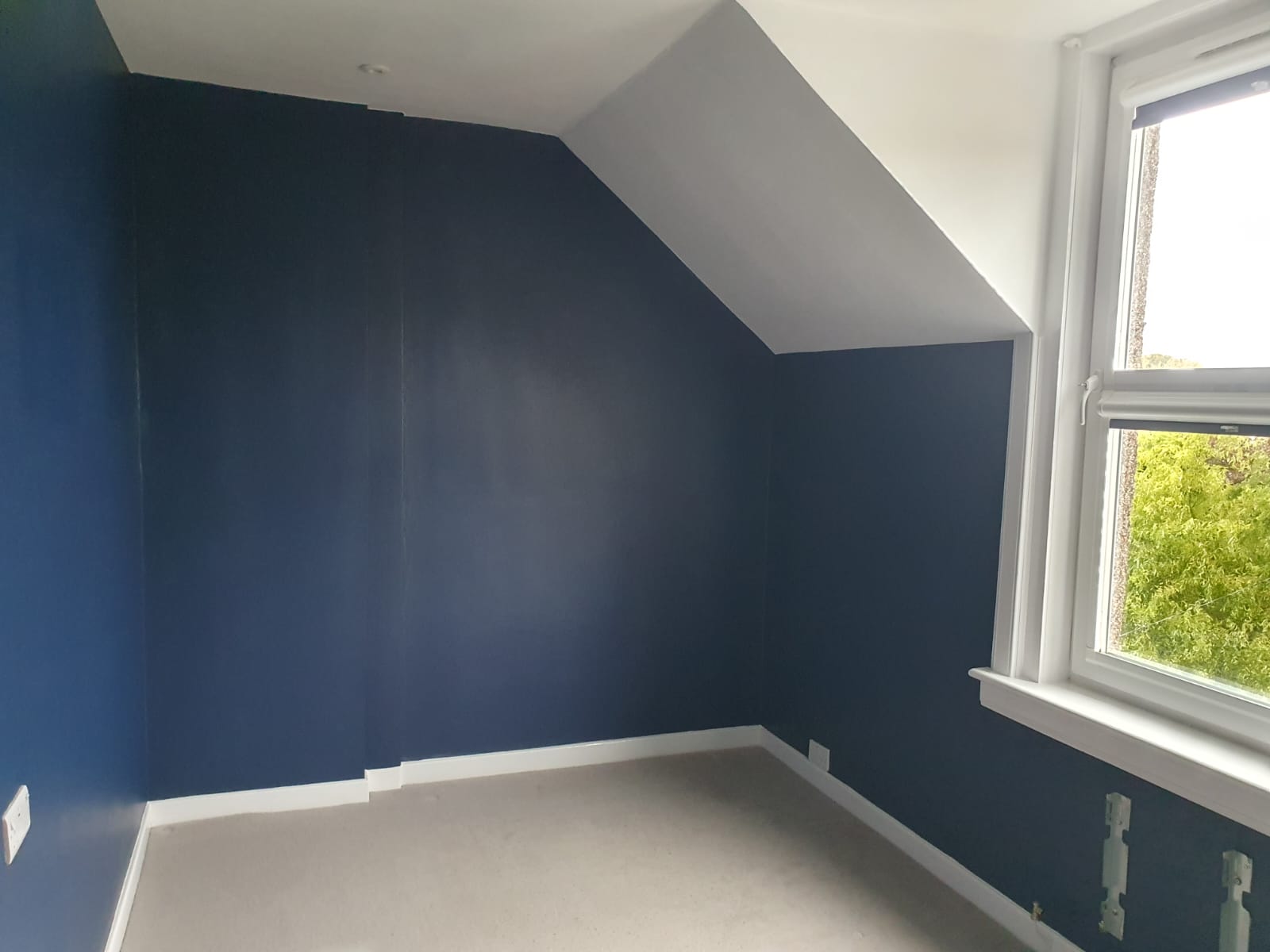


Planning to Decorate Your Tenement Flat?
Every project starts with a free, no-obligation home visit. We’ll look at the condition of your walls, discuss your ideas, and give you an honest quote — no pressure, no hidden costs.